

As our case is new, so we must think anew and act anew.
-Abraham Lincoln
Second Annual Message to Congress, December 1, 1862
Not all transformations are the same. Learning a new language adds capability. Going to college temporarily disorients. Changing careers restructures your professional identity. But the dragonfly? The dragonfly becomes something ontologically1 different - a creature for whom the water that was home is no longer even breathable.
AI is asking each of us a question we haven’t fully heard yet: What kind of transformation is this requiring of me?
The answer varies by person, by profession, by how much of your identity is woven into tasks that machines can now perform. And the level of transformation predicts the level of pain ahead.
But here’s what the research on transitions shows: people who have a framework for understanding change navigate it better than those who don’t. The dragonfly doesn’t vote on its metamorphosis. We can choose how we understand ours.
That’s the piece. If you want the detailed version - the biology, the psychology, the practical framework - read on.

Generated by Michael J. Jabbour in collaboration Gemini 3-Pro: Neither what it was nor what it will be. The dragonfly at the moment of emergence - clinging to the shell of its former self, wings not yet dry, hanging in the hour between worlds where transformation actually happens.
The dragonfly doesn’t upgrade. It becomes.
Before flight, there’s water. The nymph2 breathes through gills, hunts in the murk, knows nothing of sky. It will live this way for years - sometimes up to five - molting3 a dozen times, each shedding bringing it incrementally closer to something it cannot yet imagine.
Then comes the final molt.
The nymph crawls from the water, grips a stem, and stops breathing the way it has always breathed. Hemolymph - the insect analog of blood - pumps into crumpled tissue that unfurls into wings. Air swallows into the body, stiffening structures that were soft moments before. The creature arches backward, pulls free from its own discarded shell, and waits.
For an hour or more, it is neither what it was nor what it will be.
Then it flies.
This isn’t evolutionary change - not across generations. This is developmental transformation - within one life. Biologists call it incomplete metamorphosis4: no cocoon, no chrysalis.5 Just exposure (Futahashi et al., 2022).
No protective chrysalis. No dormant waiting.
Just the raw, vulnerable work of becoming.
We’ve Seen This Before
In many of our lifetimes, we’ve witnessed several massive transformations of how society works.
Email. The internet. Mobile phones.
And now, AI.
Each arrived with its own texture. Email didn’t replace the letter - it replaced the phone call we never made, the memo we couldn’t be bothered to write, the coordination that was simply too expensive to attempt. The internet didn’t just connect computers - it collapsed the friction of information so completely that we rebuilt entire industries around the assumption that knowledge could flow freely.
Mobile phones didn’t just make us reachable - they rewired our relationship to presence itself.
But here’s what’s worth noticing: the pace is accelerating.
Adoption curves are compressing. Pew’s tracking shows U.S. smartphone ownership moving from 35% in 2011 to a majority by early 2013 - and to 91% by 2025. ChatGPT hit roughly 100 million monthly active users in about two months - one of the fastest consumer ramps on record at the time (Reuters, 2023). A few months later, Threads hit 100 million sign-ups in about five days (TechCrunch, 2023).
The curve isn’t just steep. It’s breaking.
The Taxonomy of Transformation
Not all change changes us equally.
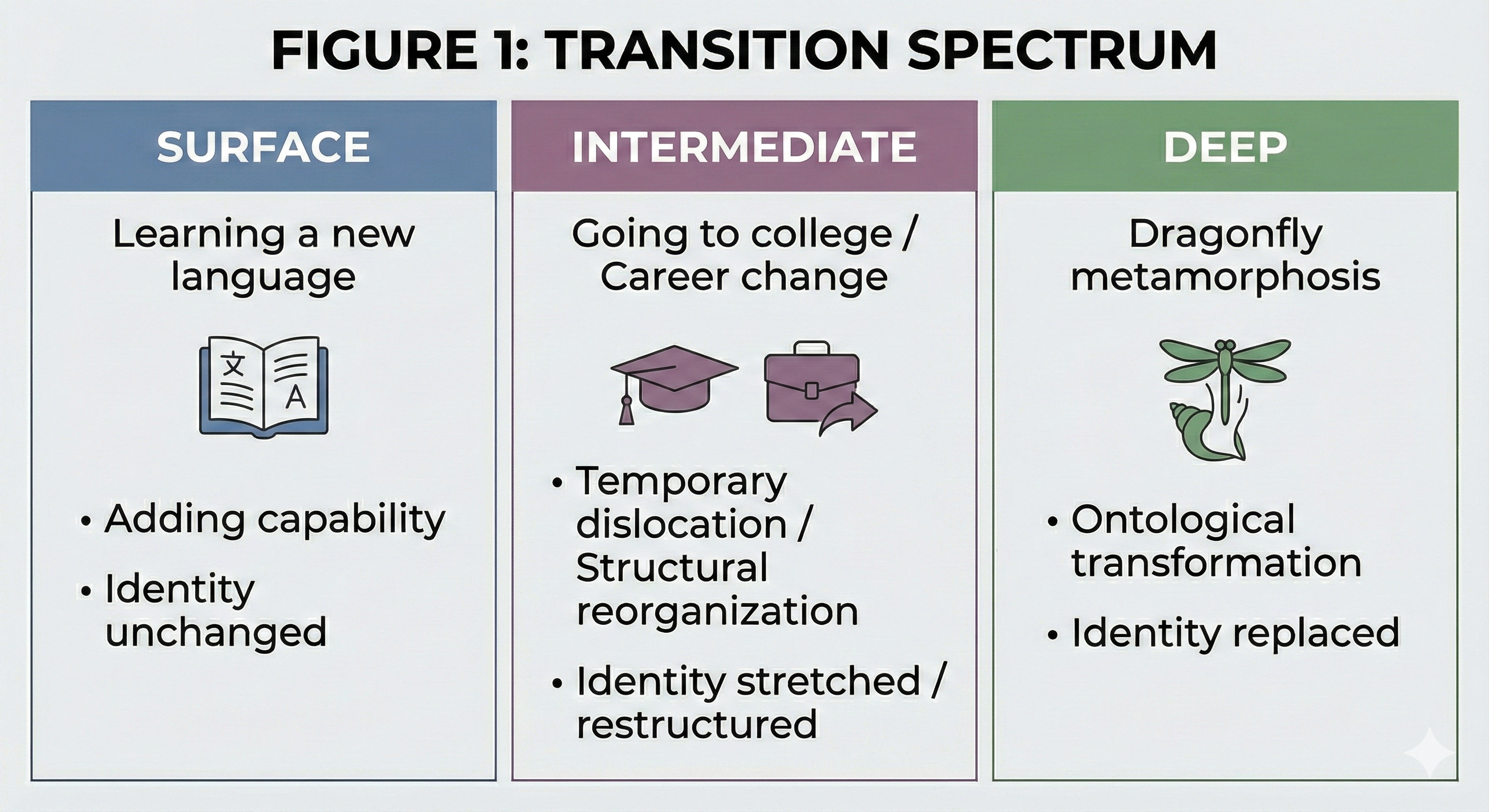
Figure 1: Transformation Spectrum
When you learn a new language, you add something. Your core remains intact. You gain capability without losing identity.
When you go to college, you experience temporary dislocation. The world feels unfamiliar. You don’t quite fit your old context anymore, but you haven’t yet found your new one. Eventually, though, you emerge - expanded, perhaps, but fundamentally recognizable to yourself.
When you change careers, something deeper shifts. The structure of your days changes. Your professional identity - the answer to “what do you do?” - has to be rebuilt. But you’re still you, just reorganized around different work.
The dragonfly? The dragonfly undergoes ontological transformation.6 The nymph doesn’t learn to fly. It doesn’t add wings to its existing form. It becomes a creature for whom flight is possible - which means becoming a creature for whom water is no longer home.
The level of transformation might be a predictor for the level of pain.
What AI Is Actually Asking
The question we should be asking isn’t “Will AI take my job?”
It’s this:
What kind of transformation is AI actually requiring of me?
A first principle: identity is what competence feels like (or is) over time. Do something long enough, in a stable medium, and it becomes “who you are.” Change the medium - and the self has to renegotiate its shape.
Because the honest answer varies - by person, by profession, by how deeply your identity is woven into the tasks AI can now perform.
For some, AI is language learning. A new tool. You add it to your repertoire and carry on.
For others, AI is college. Disorienting, temporarily destabilizing, but ultimately a passage to expanded capability.
Sam Schillace recently named this distinction in the developer domain: the difference between coders and engineers. Coders follow instructions well. Engineers decompose problems from first principles. AI is about to expose that gap in a stark way. What’s true in code will be true everywhere.
For still others - and this is the part we don’t talk about enough - AI is the dragonfly moment. The recognition that the water you’ve lived in your whole professional life is no longer your medium.
The research on how humans navigate major transitions goes back over a century. Anthropologist Arnold Van Gennep first described the three-stage pattern in 1909: separation from a prior role, navigating a liminal7 space between what was and what will be, and finally incorporating the new role. Victor Turner extended this work, calling the middle phase “betwixt and between8” a state of ambiguity where the old identity has dissolved but the new one hasn’t yet formed (Turner, 1966; Beech, 2011).
Nancy Schlossberg, professor emeritus of counseling psychology at the University of Maryland, built on this foundation to create a framework for understanding how adults experience transition. She identifies four factors that shape how we navigate change: our situation, our self (identity and coping resources), our support systems, and the strategies we deploy (Schlossberg, 1981; Goodman et al., 2006).
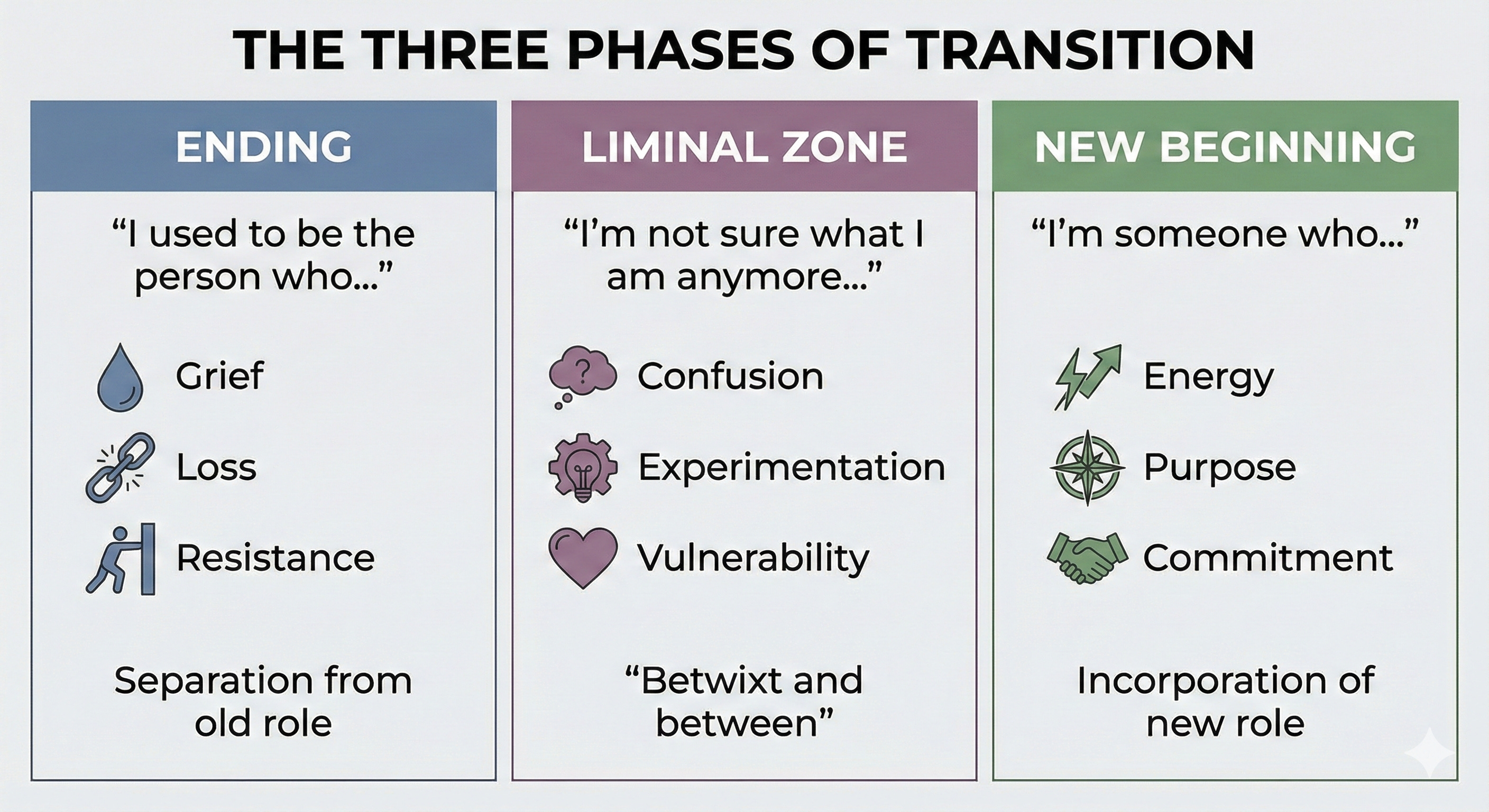
Figure 2: The Three Phases of Transition (Van Gennep/Turner/Schlossberg)
The model reveals something crucial: transition starts with an ending.
This is paradoxical but true. Before we can become what AI makes possible, we have to let go of what we were before AI arrived. And that letting go - that acknowledgment that certain skills, certain sources of pride, certain ways of mattering in the world may be diminishing - is where the real work begins.
The Liminal Zone

Generated by Michael J. Jabbour incollaboration Gemini 3-Pro: The liminal zone: calm water behind, the wave building ahead. You can’t go back to shore. You can’t yet ride what’s coming. The only option is to sit in the uncertainty and wait for the moment when action becomes possible.
The “betwixt and between” middle space, where the old is gone but the new hasn’t yet arrived - it’s where the dragonfly hangs, arched backward, neither aquatic nor aerial.
In organizational change, this phase is where transformations often stall - because uncertainty and role ambiguity reliably drag on well-being, engagement, and performance (Albrecht et al., 2023). The liminal zone feels like confusion, but it’s actually reconfiguration - the period when psychological realignments take place (Beech, 2011).
This is where a lot of knowledge work is right now.
We’re not sure yet what it means to be a writer when writing can be generated. We’re not sure what it means to be a coder when code can be synthesized. We’re not sure what it means to be a knowledge worker when knowledge can be retrieved, summarized, and applied by systems that don’t get tired.
The liminal zone is uncomfortable, frustrating and irritating, yet in some ways oddly peaceful - like the eye of a storm.
But it’s also - and the research confirms this - the seedbed9 for new beginnings.
Is There Value in Learning to Surf?
Here’s the question underneath all of this:
Is there value in learning to surf so you can ride the wave?
Or does the wave just carry you regardless?
If the dragonfly is the transformation, surfing is the strategy.
The honest answer is: it depends on what you want.
Stay close to shore? If you want to minimize disruption, there’s a path for that. Stay close to the shore. Wait for the wave to settle. Let others figure out the new shape of things. This isn’t failure - it’s a legitimate strategy, and for some people in some circumstances, it’s the right one.
Learn the water? If you want to maximize agency, there’s a different path. Learn the water. Study the currents. Develop the muscles and the intuition to read what’s coming and position yourself to catch it.
Neither path eliminates friction.
But one path lets you choose how you engage with what’s coming.
The Spectrum of Options
So what’s actually ahead?
Let me be direct: frustration, friction, and probably some fear.
The psychological research on transitions suggests that even positive changes produce stress (Barsalou, 2024). Physiology often reacts to novelty before meaning catches up; whether we experience it as threat or challenge depends on appraisal.10 And sustained novelty - which is what we’re living through - produces sustained arousal, which eventually produces exhaustion.
But here’s what the research also shows: people who have a framework for understanding transition navigate it better than those who don’t (Weiner, 2009).
The dragonfly has no say in its becoming. But we do.
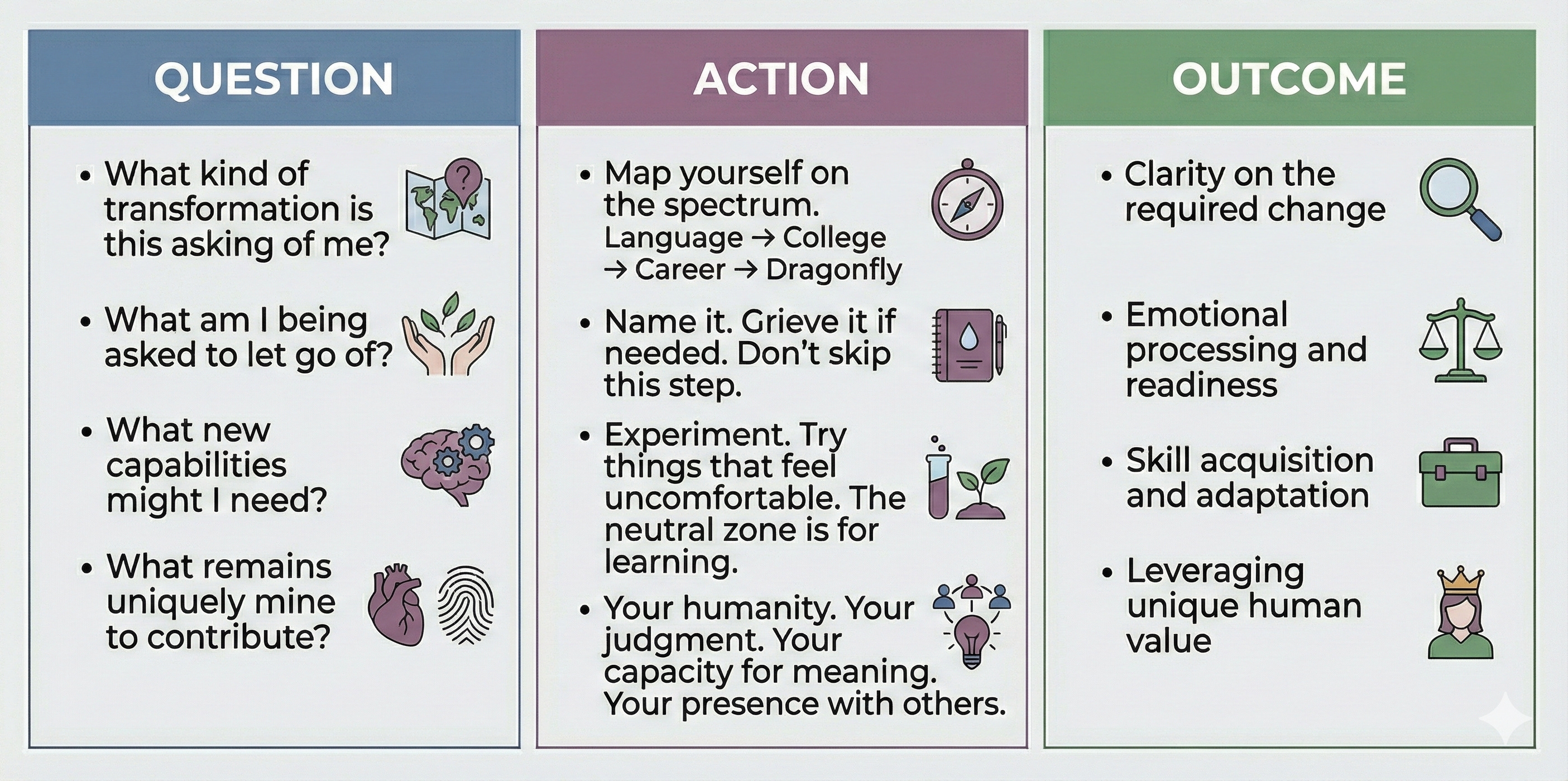
Figure 3: Navigation Framework for AI Transformation
The Path Forward
Assuming there is a path forward for this to be less painful, more productive, and still as meaningful - how do we find it and learn?
The dragonfly offers one answer.
It doesn’t transform all at once. It molts. Repeatedly. Each molt is an incremental change that preserves the organism while moving it toward what it will become. The nymph doesn’t know it’s becoming a dragonfly. It just keeps doing what nymphs do - eating, growing, shedding - until one day the process reaches a tipping point and everything accelerates.
This is what we’re doing now.
We’re molting. Every time you use an AI tool and notice what it does well and what it misses, you’re molting. Every time you find yourself explaining something to a colleague who hasn’t started yet, you’re molting. Every time you feel the friction between how you used to work and how you’re beginning to work, you’re molting.
The transformation isn’t a single moment.
It’s a series of small deaths and rebirths, each one bringing you closer to a form you can’t yet fully see.
What the Dragonfly Knows
Here’s the thing about dragonfly metamorphosis that biologists find remarkable:
The transformation is a vulnerable time.
The moment of emergence - when the nymph is neither water creature nor air creature - is when predators strike. The wings aren’t dry. The body is soft. The creature cannot flee.
This is true for us, too.
The neutral zone is where we’re most exposed. Where our old competencies don’t quite apply and our new ones haven’t solidified. Where we feel uncertain, disoriented, and perhaps a little foolish.
But this is also - and this matters - when the critical psychological realignments happen.
The dragonfly doesn’t emerge from the water because it decided to fly.
It emerges because the larval stage is over - because this body can’t stay what it was.
The Cycle Continues
After the dragonfly emerges, after the wings dry and the first flight happens, there’s a brief period of hunting and mating.
And then it returns to the water - not to live, but to begin the cycle again.
The female deposits eggs. The eggs become nymphs. The nymphs begin their years in the murk.
This is how transformation works.
It’s not a one-time event. It’s a pattern. A rhythm. A way of being in the world that accepts impermanence as the price of becoming.
Email didn’t end transformation. Neither did the internet or mobile phones.
AI won’t either.
What we’re learning now - how to let go, how to navigate the neutral zone, how to emerge into a new way of being - these are skills we’ll need again. And again.
The dragonfly doesn’t become something final.
It becomes something that continues.
The water is running out. The time for molting is here.
What kind of transformation is this asking of you?
References
Albrecht, S. L., Furlong, S., & Leiter, M. P. (2023). The psychological conditions for employee engagement in organizational change: Test of a change engagement model. Frontiers in Psychology, 14, 1071924. https://doi.org/10.3389/fpsyg.2023.1071924
Beech, N. (2011). Liminality and the practices of identity reconstruction. Human Relations, 64(2), 285-302. https://doi.org/10.1177/0018726710371235
Futahashi, R., Okude, G., Sugimura, M., et al. (2022). Molecular mechanisms underlying metamorphosis in the most-ancestral winged insect. Proceedings of the National Academy of Sciences, 119(9), e2114773119. https://doi.org/10.1073/pnas.2114773119
Barsalou, L. W., et al. (2024). Establishing a Comprehensive Hierarchical construct of Eustress (CHE). Current Psychology. https://doi.org/10.1007/s12144-024-06750-7
Goodman, J., Schlossberg, N. K., & Anderson, M. L. (2006). Counseling adults in transition: Linking Schlossberg’s theory with practice in a diverse world (3rd ed.). Springer.
Weiner, B. J. (2009). A theory of organizational readiness for change. Implementation Science, 4, 67. https://doi.org/10.1186/1748-5908-4-67
Pew Research Center. (2025, November 20). Mobile fact sheet.
PYMNTS. (2025). Gen AI: The technology that broke the adoption curve.
Reuters. (2023, February 2). ChatGPT sets record for fastest-growing user base.
Schlossberg, N. K. (1981). A model for analyzing human adaptation to transition. *The Counseling Psychologist*, 9(2), 2-18. https://doi.org/10.1177/001100008100900202
TechCrunch. (2023, July 10). Threads surpasses 100 million signups in just five days.
Turner, V. (1969). The ritual process: Structure and anti-structure. Aldine. https://doi.org/10.4324/9781315134666
Van Gennep, A. (1960). The rites of passage (M. B. Vizedom & G. L. Caffee, Trans.). University of Chicago Press. (Original work published 1909)
Footnotes
Ontological meaning relating to the fundamental nature of being - not just what you do, but what you are.
The juvenile form of a dragonfly - an underwater creature that looks nothing like the aerial adult it will become.
Shedding its exoskeleton to grow. Each molt is a mini-transformation that allows the creature to get larger.
Unlike butterflies, which dissolve entirely inside a cocoon before reforming, dragonflies transform gradually through successive molts - exposed the whole time.
The protective casing where a caterpillar transforms into a butterfly. Dragonflies don’t get one.
A change not just in role or skill, but in the very category of being you occupy.
From the Latin limen, meaning “threshold.” A liminal space is the in-between zone -you’ve left one room but haven’t yet entered the next.
Turner’s phrase for the disorienting state where old certainties have dissolved but new ones haven’t yet solidified.
The place where seeds germinate before becoming visible plants. Here: the uncomfortable middle is where new capabilities quietly take root.
In psychology, appraisal is how you interpret a situation - the story you tell yourself about what’s happening and what it means for you.
Thanks for writing this, it clarifies a lot, and your ontological distinction between 'upgrading' and 'becoming' provides a crucial framework for navigating the profound shifts AI introduces, resonating with my personal experience of how immersing in new cognitive paradigms, like advanced calculus, fundamentally reshapes one's understaning.
Michael, thought-provoking as usual. I would add thrill to the emotions. The thrill, the axcitement of what more you can do, that stage just before actually starting to build. Frustration that there is not enough time to do so much more.